
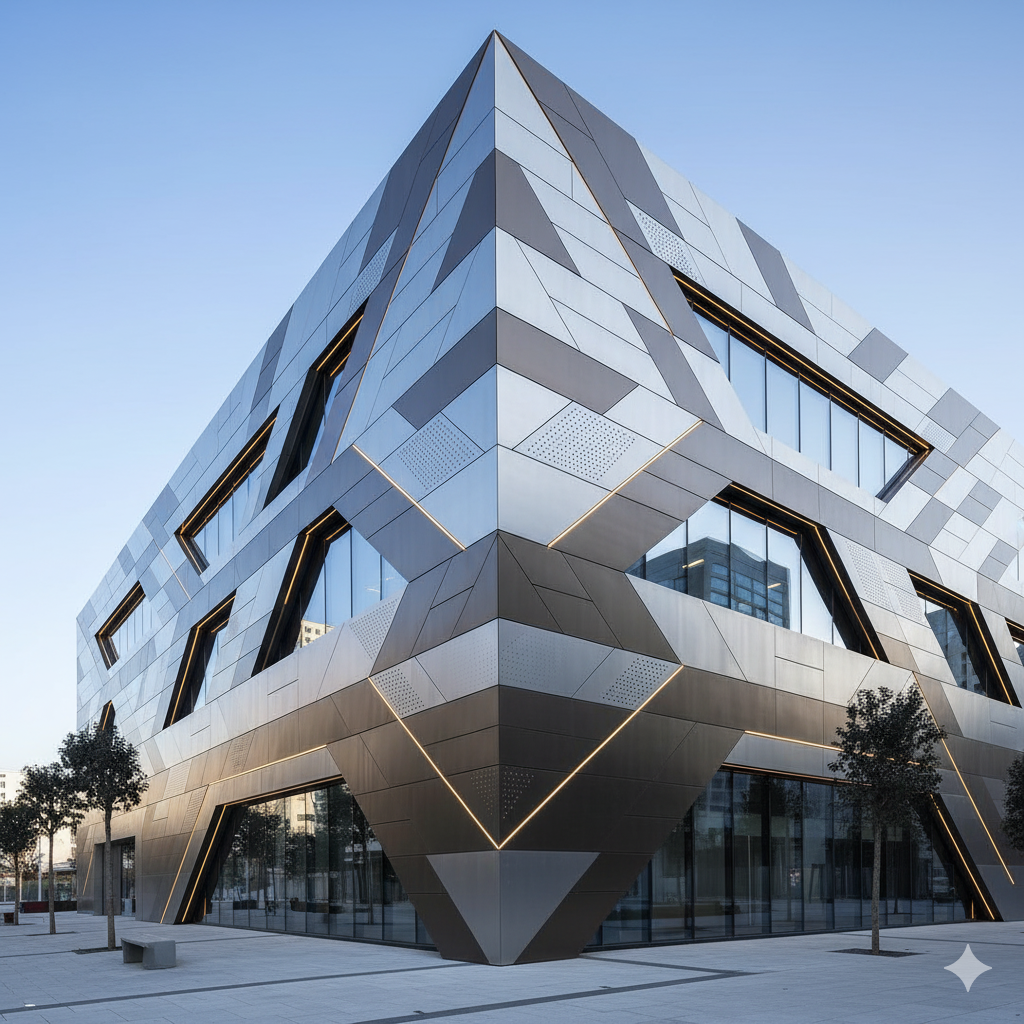
Aluminum composite wall panel give you a lightweight, durable cladding option that balances aesthetics and performance for both interior and exterior projects. You can achieve clean, modern façades or detailed architectural accents with thin aluminum skins bonded to a stable core, offering flatness, color options, and easier installation than many traditional materials.
This article will show what those panels are, where they work best, and how installation and sizing choices affect cost and longevity so you can decide if ACM fits your next project. Expect practical guidance on material types, typical uses, and installation considerations to help you specify confidently.
What Are Aluminum Composite Wall Panels?
Aluminum composite wall panels are flat cladding units made by bonding two thin aluminum sheets to a core material. They deliver a smooth, uniform exterior face, precise dimensional stability, and a range of factory-applied finishes you can specify for facades, signage, and interior walls.
Key Features and Benefits
You get a lightweight panel that reduces structural load while keeping high rigidity. Typical panels weigh far less than solid metal sheets, making handling and installation faster and cheaper.
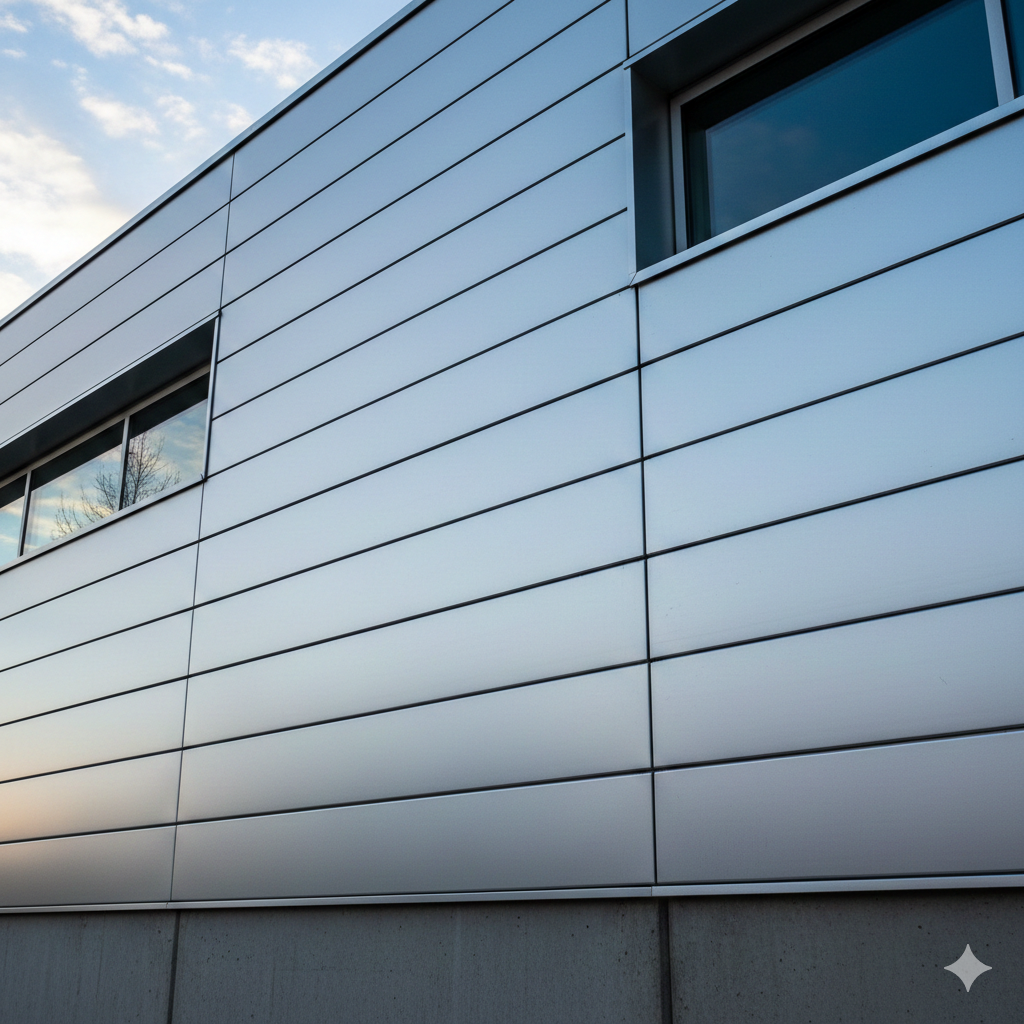
Panels offer a consistent, flat surface and precise edge tolerances, which lets you achieve tight joints and crisp mullion lines on façades. Factory finishes include PVDF and polyester paints in many colors and metallic effects, so you control appearance and weather resistance.
Maintenance is straightforward: periodic washing keeps finish warranty conditions intact, and localized repair is possible for small dents. The combination of durability, formability, and color options supports complex shapes, long runs, and contemporary aesthetics.
Core Materials and Composition
The standard construction uses two 0.3–0.5 mm aluminum skins bonded to a core. The skins provide stiffness, corrosion resistance, and a paintable surface; their thickness influences panel stiffness and acoustic properties.
Core choices include polyethylene (PE), fire-retardant mineral (FR), and non-combustible mineral cores. PE cores are economical but combustible; FR cores meet stricter fire codes by adding mineral fillers and retardants; non-combustible cores (e.g., mineral-filled) provide the highest fire performance for tall buildings.
Adhesive layers (thermoplastic or thermosetting) and continuous bonding ensure panel flatness and long-term delamination resistance. Edge treatment, bonded return lips, and protective backing films affect joint detailing and on-site handling.
Types of Aluminum Composite Wall Panels
You will encounter three main commercial types: PE-core ACP, fire-retardant ACP (FR), and non-combustible/mineral-core panels. Choose based on code requirements and project risk profile.
Finish variations include PVDF-coated standard panels for long-term color retention, polyester-coated economical panels for interiors, and anodized or brushed aluminum for specific aesthetics. Profile options range from flat, perforated, curved, to folded forms for rainscreen and decorative applications.
System formats vary by attachment: ventilated rainscreen panels with subframes, insulated sandwich panels with integrated insulation, and cassette or thru-fastened panels. Match panel type to wind loads, fire codes, thermal needs, and the installation method you plan to use.
Applications and Installation
Aluminum composite wall panels provide durable cladding, clean lines, and flexible design choices. You’ll find them on storefronts, high-rises, interior partitions, and signage where lightweight strength and a flat finish matter.
Commercial and Residential Uses
You can use aluminum composite panels (ACPs) for exterior façades on office buildings, retail fronts, and hospitals because they resist weather and deliver consistent color and finish. They suit high-rise curtain walls and low-rise storefronts where precise alignment and minimal panel bowing are required.
For residential projects, ACPs work well for modern façades, soffits, and feature walls that require slim profiles and multiple color options. You can also specify them for interior applications such as elevator surrounds, reception walls, and tenant fit-outs where fire-rated cores and acoustic backing are important.
Key benefits to evaluate: weight (reduces structural load), flatness (for tight visual tolerances), and available fire-performance ratings (choose FR cores where codes demand).
Installation Methods and Best Practices
You should start by verifying substrate flatness, load-bearing framing, and wind-load calculations before ordering panels. Install a certified aluminum subframe or rails fastened with corrosion-resistant anchors; spacing depends on panel size and local wind loads.
Use concealed fasteners or visible rivets per design intent, and apply continuous or intermittent sealant at joints to maintain weathertightness. Allow for thermal expansion with correctly sized gaskets, joint gaps, or slotted fixings — typically 5–10 mm depending on panel length and climate.
Follow these steps: 1) install vertical or horizontal rails, 2) mount panels using recommended screws or clips, 3) seal horizontal joints with backer rod and silicone, 4) finish with flashings at edges and penetrations. Inspect for flatness, secure fastenings, and proper drainage during and after installation.
Maintenance and Durability
You should schedule visual inspections every 6–12 months to check sealant integrity, fastener corrosion, and panel alignment. Clean painted or coated faces with mild detergent and low-pressure water; avoid abrasive cleaners that strip coatings.
Address localized damage by replacing individual panels or repairing with manufacturer-approved touch-up coatings. Monitor joints and touch up sealants as UV and temperature cycles degrade elastomers over time.
Material lifespan depends on coating system and environment. In coastal or industrial settings, specify higher-grade anodized or PVDF coatings and stainless fasteners to reduce corrosion risk and lengthen service life.




Leave a Reply