

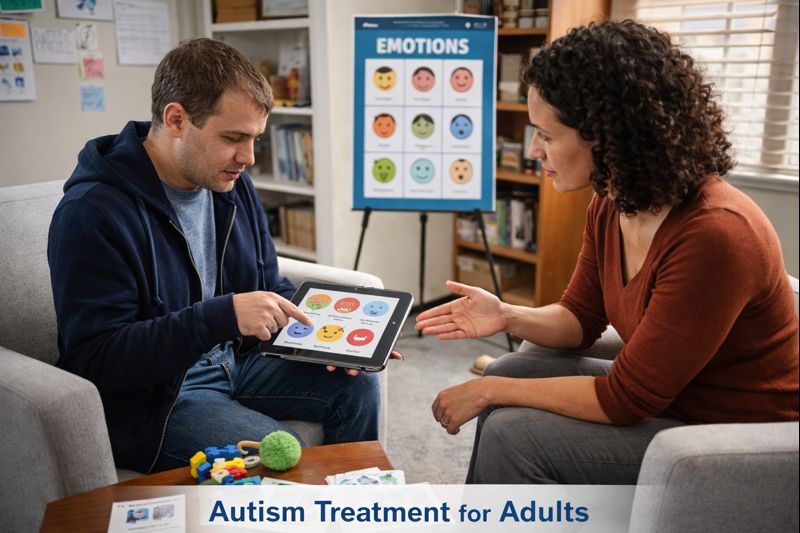
You can find meaningful, practical support through Autism Treatment Adults programs that focus on real-life skills, mental health, and independence. Effective treatment typically combines targeted therapies like CBT, occupational therapy, and skill-based programs, personalized support plans, and, when needed, medication to manage co-occurring conditions, all tailored to your goals and strengths.
This article guides you through evidence-based treatment options, everyday support strategies, and how to build long-term care that fits your life. Expect clear explanations of what works, what to ask providers, and how to create a plan that helps you live more independently and comfortably.
Effective Autism Treatment Options for Adults
These treatments target core challenges—communication, daily living, sensory differences, and co-occurring anxiety or depression—using structured behavioral approaches, targeted medications, social learning, and practical skill-building.
Behavioral Therapies for Adults
Behavioral therapies focus on changing specific behaviors and teaching practical skills you can use daily. Applied Behavior Analysis (ABA) for adults can target routines, job-related tasks, and reducing self-injurious or interfering behaviors using data-driven goals and reinforcement schedules.
Cognitive Behavioral Therapy (CBT) adapts well for adults with autism to address anxiety, depression, and rigid thinking by breaking problems into concrete steps and practicing new responses. Therapists often use visual aids, shortened sessions, and concrete examples to match learning preferences.
Acceptance and Commitment Therapy (ACT) and mindfulness-based approaches help you tolerate distress and commit to values-based actions. Progress usually depends on regular practice, clear behavioral targets, and coordination with other supports like vocational services.
Medication Management
Medications do not treat autism itself but can reduce co-occurring symptoms that limit daily functioning. Selective serotonin reuptake inhibitors (SSRIs) can lessen anxiety and obsessive thoughts; antipsychotics like risperidone may reduce severe irritability or aggression under close monitoring.
Stimulants or non-stimulant ADHD medications can improve attention and executive functioning if attention deficits interfere with work or safety. Prescribers should use the lowest effective dose and monitor side effects—weight gain, metabolic changes, sedation, or increased repetitive behaviors.
Work with a psychiatrist experienced in autism to set measurable targets (sleep, anxiety scores, work attendance) and review efficacy every 6–12 weeks, adjusting medication alongside therapy and environmental supports.
Social Skills Training
Social skills training teaches specific, actionable behaviors you can practice and measure. Programs focus on conversation skills, recognizing nonverbal cues, managing workplace interactions, and handling dating or friendship situations through role-play and video feedback.
Group-based formats provide safe, structured practice with peers while individual coaching targets personalized goals like negotiating tasks at work or initiating conversations. Use clear, observable goals (e.g., “initiate 2 job-related conversations per day”) and homework to generalize skills across settings.
Augment training with technology—apps for social cue recognition or virtual reality for workplace scenarios—when available, and combine training with occupational supports to reinforce real-world use.
Occupational Therapy Approaches
Occupational therapy (OT) helps you build routines, sensory regulation, and task-specific skills needed for independent living and employment. OTs assess sensory profiles and create strategies—sensory diets, environmental modifications, and coping tools—to reduce overload and improve focus.
Task analysis breaks complex activities (meal prep, time management, work procedures) into teachable steps, with graded independence and visual supports like checklists or timers. OTs also recommend assistive technology and workplace accommodations, and they coordinate with employers for on-site supports or job carving.
Measure outcomes with objective markers: independence level on daily tasks, reduction in sensory meltdowns, or increased hours of paid employment.
Support Strategies and Long-Term Care
Support should target practical independence, stable mental health, and meaningful work. You’ll benefit most from coordinated services that blend job supports, counseling, and daily-living skills training.
Vocational Support and Employment
Focus on job matching and on-the-job supports tailored to your strengths and sensory needs. Seek vocational rehabilitation, supported employment programs, or customized employment that analyze tasks and adjust the role to match your abilities.
Ask for workplace accommodations such as a quiet workspace, written task lists, flexible scheduling, or noise-cancelling headphones. These small changes often make the difference between job retention and repeated turnover.
Use stepwise placement: start with short shifts or volunteer roles, add responsibilities gradually, and document routines so supervisors can follow predictable procedures. Request a job coach for the first weeks to train coworkers and create visual supports (checklists, flowcharts).
Track goals with measurable targets: hours worked, tasks completed, independent task rate. Reassess every 3–6 months and update supports as skills or job demands change.
Mental Health and Counseling
Prioritize evidence-based therapies and medication management when needed. Cognitive Behavioral Therapy adapted for autism and trauma-informed approaches help with anxiety, depression, and repetitive thinking. Find clinicians experienced with autistic adults and sensory or communication differences.
Consider regular psychiatric review if you have mood or anxiety disorders; medications can be effective but require close monitoring for side effects and interactions.
Build a predictable routine for appointments and coping strategies (breathing, grounding, sensory breaks). Use crisis planning: identify triggers, de-escalation steps, and emergency contacts. Peer support groups and autism-informed case managers provide ongoing practical advice and reduce isolation.
Life Skills Development
Train in concrete activities of daily living: money management, meal planning, medication routines, transportation navigation, and housing paperwork. Break each skill into discrete steps and practice with prompts until you reach independence. Use visual schedules, apps with reminders, and checklists to reduce reliance on memory.
Plan housing to match support needs: supported living with staff, shared housing with roommates, or independent living with periodic check-ins. For benefits and legal planning, consult a benefits counselor and consider durable power of attorney or representative payee arrangements for finances if needed.
Teach social problem-solving with role-play and real-world practice—ordering at a café, asking for help, handling conflict. Set measurable milestones (cook three meals/week, use public transit twice/month) and review progress quarterly to adjust supports.







Leave a Reply