

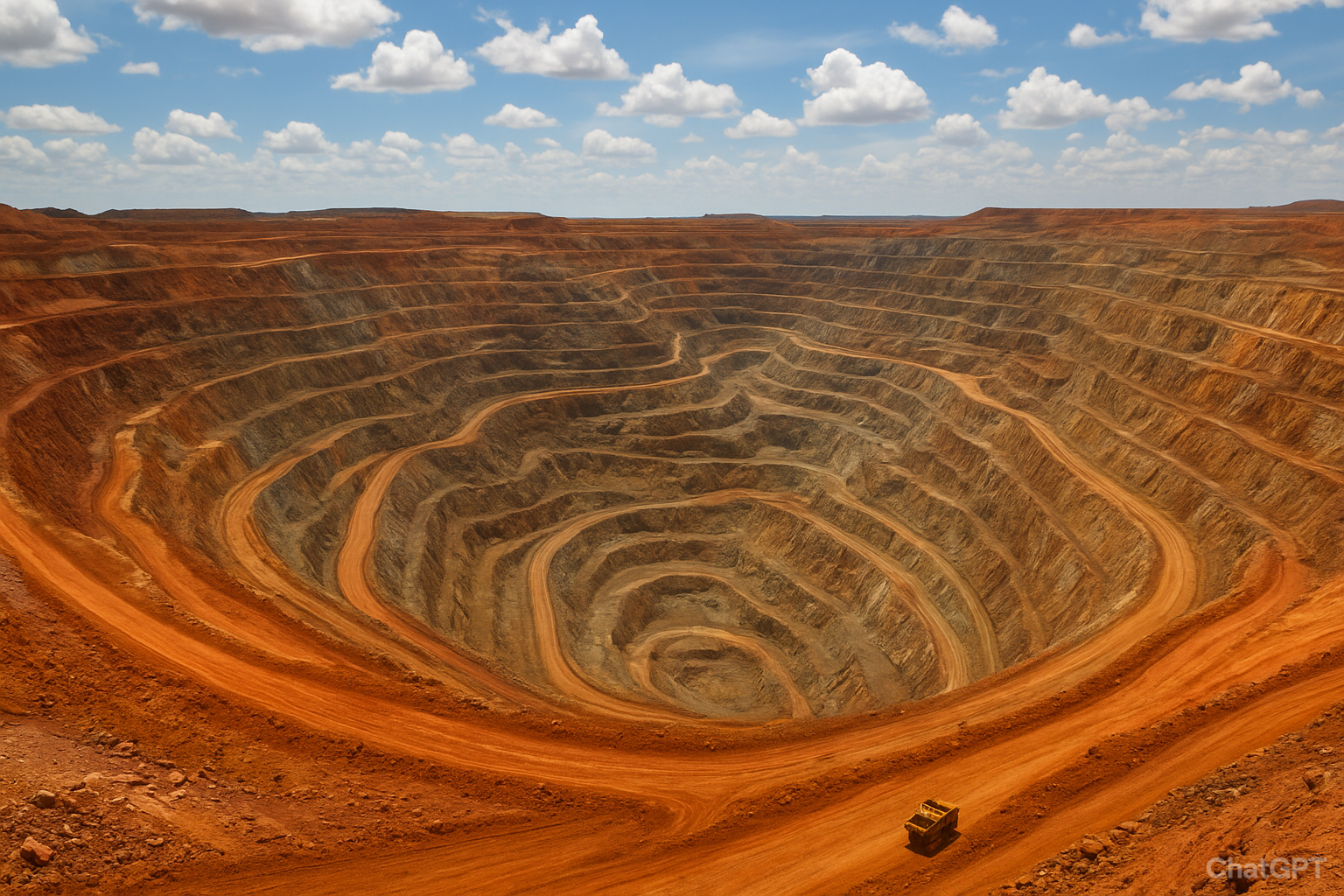
You rely on copper every day — in your phone, home wiring, and the clean-energy technologies reshaping the economy — and understanding how it’s produced matters for costs, supply, and the environment. Copper mining unlocks that metal from the ground through distinct surface and underground methods, then refines it so it can power industries and low‑carbon technologies.
This article will show how copper is found and processed, why its demand is rising, and what that means for prices, projects, and the timeline for new supply. Expect clear explanations of extraction methods, the metal’s key uses, and the economic forces shaping the sector so you can follow the headlines and assess the stakes.
Copper Mining Processes
You will encounter a sequence of technical stages: locating deposits, choosing how to extract ore, processing the ore into copper metal, and managing environmental risks and remediation. Each stage relies on specific methods, equipment, and controls to protect worker safety and limit environmental harm.
Exploration and Discovery
You begin with geological mapping, remote sensing, and geophysical surveys to identify favorable rock types and structures that host copper—porphyry, sediment-hosted, and volcanogenic settings are common targets. Drilling programs then provide core samples that quantify grade, thickness, and continuity; resource classification (measured, indicated, inferred) follows international reporting codes.
You must analyze geochemistry, alteration minerals, and alteration halos to vector toward higher-grade zones. NI 43-101 or JORC-style studies translate drilling data into mineable reserves and underpin feasibility studies that estimate capital, operating cost, and production profiles.
Extraction Methods
You select open-pit or underground techniques based on ore depth, geometry, and economics. Open-pit mining uses drilling, blasting, truck-and-shovel fleets, and conveyors for large, near-surface deposits; it offers high throughput but larger surface disturbance. Underground mining (block caving, room-and-pillar, cut-and-fill) suits deep, high-grade orebodies and reduces surface footprint but raises costs and ventilation demands.
You apply pre-stripping, ore dilution control, and ore-waste material handling to optimize recovery. For low-grade oxide ores, you may use in-situ leaching where appropriate hydrogeology exists; this avoids large-scale excavation but requires tight groundwater controls and solvent management.
Ore Processing
You treat sulfide and oxide ores differently. For sulfide ores, you typically crush and grind the ore, then concentrate copper minerals by flotation to produce a copper concentrate (20–30% Cu) for smelting. For oxide ores, hydrometallurgical methods—heap leaching with sulfuric acid followed by solvent extraction and electrowinning (SX/EW)—produce cathode copper (99.99% Cu) without smelting.
You monitor key process parameters: particle size distribution, reagent dosages, pH, and slurry density in flotation; acid strength, leach kinetics, and organic loading in heap leach and SX. Final refining uses electrorefining or pyrometallurgical smelting and converting followed by electrorefining to reach market-grade purity.
Environmental Impact and Management
You face impacts including landscape alteration, tailings and waste rock leachate, water use, air emissions, and biodiversity loss. Implement engineering controls: lined heap leach pads, filtered tailings or dry-stacking, water treatment plants, and progressive reclamation to reduce long-term liability.
You must perform baseline environmental studies, continuous monitoring (groundwater, surface water, dust, and noise), and implement closure plans funded by bonds or trust accounts. Community engagement, disclosure of monitoring data, and adaptive management reduce social risk and ensure regulatory compliance.
Applications and Economic Importance
Copper supports electricity generation and transmission, building infrastructure, transportation, and electronics while driving export earnings and local employment in producing regions.
Industrial Uses of Copper
You use copper in electrical wiring, motors, and transformers because of its high electrical conductivity and thermal performance.
Copper-clad cables and busbars appear in power grids; EV motors and batteries rely on copper windings and connectors for efficient energy transfer.
You encounter copper in plumbing and HVAC systems due to corrosion resistance and antimicrobial properties.
Architectural uses include roofing and cladding where durability and low maintenance matter.
Copper is essential in electronics: printed circuit boards, connectors, and heat sinks.
Industrial machinery uses copper alloys (brass, bronze) for wear resistance and machinability.
Global Production Leaders
Chile produces roughly a quarter of the world’s copper and hosts large porphyry mines like Escondida and Collahuasi.
Peru and China rank next, with Peru notable for rapid output growth and China for both production and heavy domestic consumption.
You’ll find significant operations in the United States, Australia, and Congo, each supplying regional industries and export markets.
Mine ownership spans major multinationals and national firms; long-life, high-grade assets underpin stable export revenue for host countries.
Production geography affects supply security: concentrate flows, refining capacity, and transport infrastructure determine who benefits economically.
You should note that countries with integrated smelting and refining retain more value from ore output than those exporting concentrates.
Market Trends and Demand
Demand rises with electrification: electric vehicles, grid upgrades, and renewable installations increase copper intensity per project.
You should expect higher copper demand from expanding EV fleets and new power transmission lines.
Price dynamics reflect supply constraints, mine development lead times, and recycling rates.
Shortfalls in new mine capacity and longer permitting cycles push prices upward during demand surges.
Investment shifts toward projects with lower water use, reduced emissions, and stronger community engagement.
You should track recycling trends too: scrap copper softens primary demand but cannot fully replace new mine output in the near term.







Leave a Reply