
If you’re searching for “ev charger installation near me,” you want a fast, reliable solution that fits your home or workplace setup. You can find qualified local installers who assess your property, recommend the right charger type, and handle permits and wiring so your EV charges safely and efficiently.
This article walks you through where to look Ev Charger Installation, what installers check during a site survey, and how location and charger type influence cost and performance. Expect clear guidance so you can compare installers, understand installation steps, and pick the option that matches your driving and budget needs.
EV Charger Installation Near Me
You’ll learn how to pick a reliable local installer, what professional installation delivers, which costs to expect, and what permits or codes commonly apply. The following subsections give practical steps, typical price drivers, and compliance items to check before scheduling work.
How to Choose a Local EV Charger Installer
Look for installers with specific experience on your charger brand and level (Level 2 vs DC fast). Ask for proof of certification (NRTL-listed equipment, electrician license) and at least three recent local references you can call or review online.
Request a site visit and written quote that lists: circuit upgrades, panel work, conduit runs, station model, labor hours, and warranty terms. Compare timelines and whether the installer handles permit pull and inspection scheduling. Prefer contractors who offer a safety checklist and post-install testing (voltage drop, GFCI/RCD verification, and load calculations).
Use a short vetting checklist:
- License & insurance verified
- Local references and recent photos
- Written, itemized quote
- Permit/inspection handling
- Post-install test report
Benefits of Professional EV Charger Installation
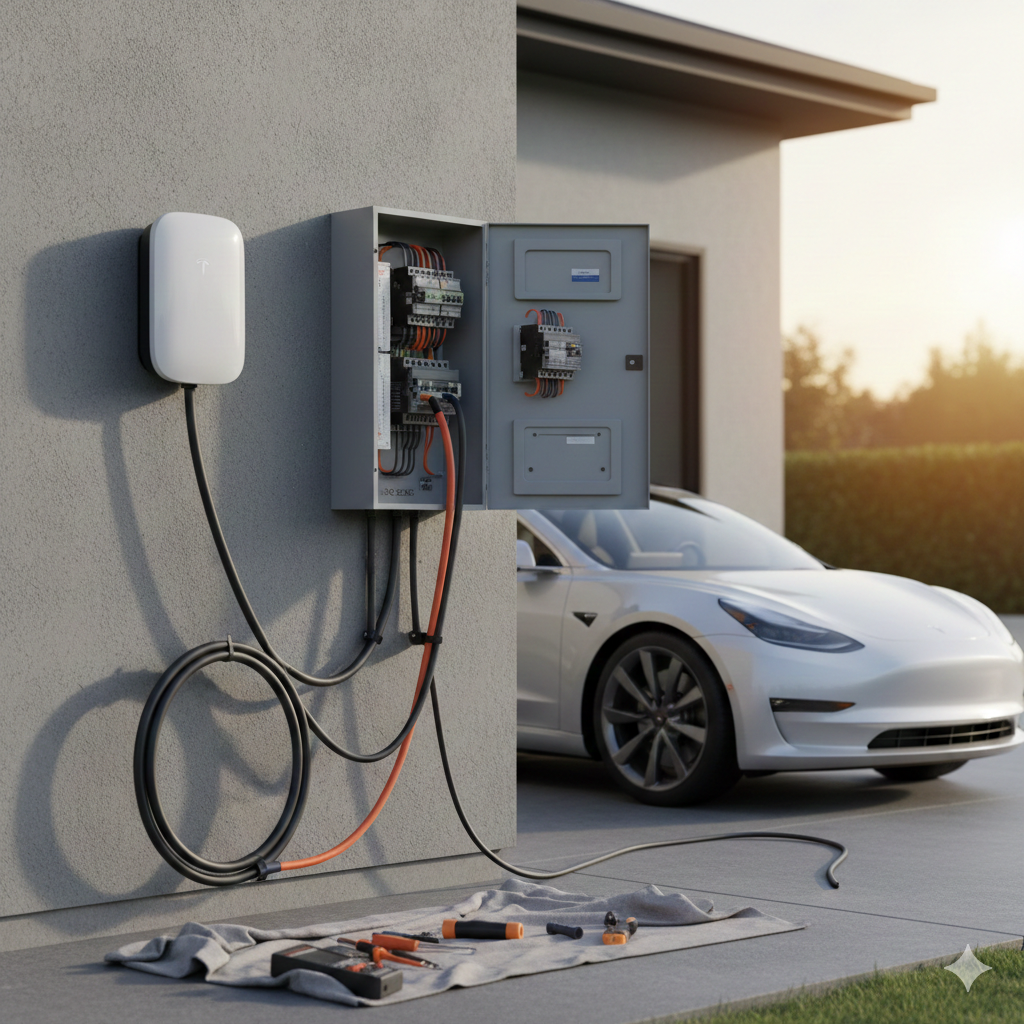
Professional installation reduces safety risks by ensuring wiring, grounding, and protective devices meet code for continuous EV charging loads. An electrician accurately sizes circuits and assesses whether upgrades—like a subpanel or service increase—are needed to avoid nuisance tripping or overheating.
You’ll get documented testing and warranties that help with future resale and insurance. Pros also optimize charger placement for cable reach and driver convenience, and can install amenities such as dedicated metering for time-of-use rates, network integration, and smart charging setup to manage load and cost.
Cost Factors for EV Charger Installation
Expect a range from a few hundred dollars for simple plug-in setups to $1,000–$3,000+ for hardwired Level 2 installs; complex jobs with service upgrades or long conduit runs can exceed $5,000. Major cost drivers: distance from panel to parking, required panel/service upgrade, trenching or concrete drilling, and charger model (basic vs networked).
Ask for an itemized quote and check incentives that reduce out-of-pocket cost. Save by grouping installations (multi-vehicle sites) or by scheduling during slower contractor periods. Keep receipts and permit documents; they often apply to utility or tax rebates.
Permits and Local Regulations
Most jurisdictions require an electrical permit and a final inspection for installed EV chargers. Verify with your municipality whether you need a zoning permit, allowable curb/driveway placement, or special requirements for multi-unit buildings.
Check utility company rules if you plan dedicated metering, demand charge mitigation, or rebate eligibility. For shared or commercial sites, ensure compliance with ADA parking and signage if public access is provided. Have the installer provide permit numbers and inspection reports so you can confirm compliance online or with the local building department.
Types of EV Chargers and Location Considerations
Choose a charger type that matches your daily driving range, parking setup, and electrical capacity. Location decisions hinge on cable reach, weather protection, and proximity to your main electrical panel.
Level 1 vs. Level 2 Charger Options
Level 1 uses a standard 120V outlet and delivers about 3–5 miles of range per hour. It works if you drive under ~30 miles daily and have overnight parking within reach of an indoor outlet. No special wiring is required, but you should confirm the outlet is on a dedicated circuit and in good condition.
Level 2 runs on 240V and provides roughly 20–60 miles of range per hour depending on vehicle and charger amperage. It requires a 40–50 amp circuit for common residential units and often a professionally installed wall box. Choose Level 2 if you need faster daily replenishment, have a garage or dedicated driveway spot, or plan to upgrade your EV later.
Consider cable length (18–25 ft typical), plug type (J1772 in North America), and smart features like scheduling, power monitoring, and Wi‑Fi. These affect convenience, cost, and future-proofing.
Home vs. Commercial Charging Solutions
Home chargers focus on convenience, cost control, and compatibility with household electrical infrastructure. You’ll prioritize Level 2 home units, mounting location (garage wall, pedestal for driveway), and whether you need a dedicated meter or load management to avoid panel upgrades. Permits and a licensed electrician are often required.
Commercial chargers prioritize throughput, durability, and user access. They include multiple Level 2 stations, and DC fast chargers (50 kW+) for quick top-ups. Site needs include ADA-compliant stalls, signage, billing or network access, and higher-capacity service. If you manage shared parking (visitor, workplace, or multi-unit), plan for user authentication, revenue, and ongoing maintenance.
Both settings require weatherproof enclosures and surge protection; choose commercial-grade hardware for public use.
Site Assessment Process
Start with a walk-through noting parking orientation, distance to your main electrical panel, and preferred mounting surface. Measure cable run length and identify obstacles like stairs or landscaping. Take photos of the panel label and available conduit paths for accurate quotes.
Have an electrician evaluate service capacity and breaker space; they’ll calculate load, recommend panel upgrades or subpanels, and size the circuit (amps and wire gauge). Confirm local permit requirements and utility interconnection rules. For multi-unit buildings, check ownership, tenant agreements, and any required approvals.
Document outlet locations, surface type, and lighting. This speeds permitting, reduces surprises, and yields more precise bids.







Leave a Reply